The latest season of Dancing on Ice premiered on ITV on Sunday, January 12th, bringing its usual mix of celebrity performances and artistic skating. For those who haven’t seen the show yet (I highly recommend watching it!), Dancing on Ice captivates audiences with its blend of glamour, intricate choreography, and professional figure skating. Celebrities are paired with professional skaters and perform in front of a panel of judges.
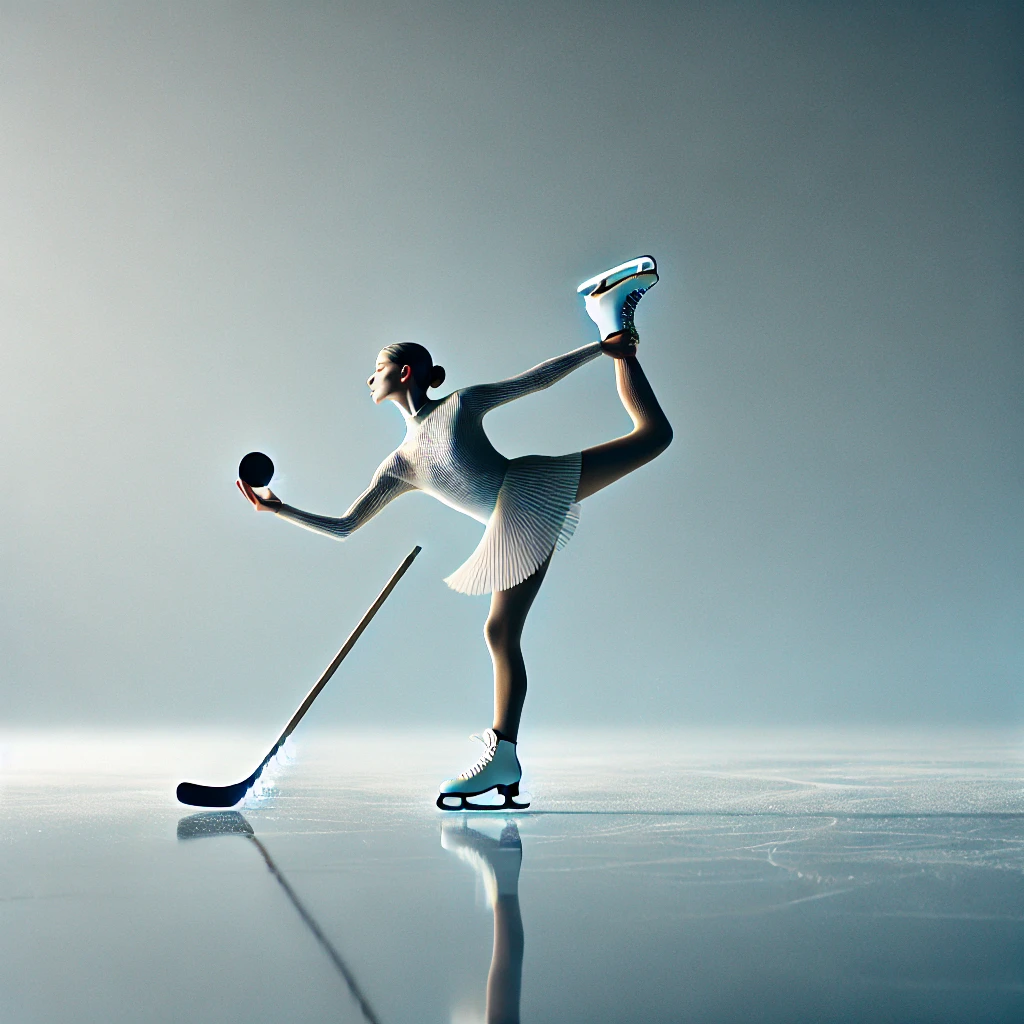
While the show's focus is on figure skating, its influence extends far beyond the sparkling routines and dazzling costumes. The popularity of Dancing on Ice has helped elevate the profiles of all ice sports in the UK, inspiring a new generation of skaters and creating exciting opportunities for crossover, in particular between ice hockey and figure skating.
But does this mean that if you can learn to skate and train as a figure skater, you can automatically play ice hockey? Or, the other way around, if you can learn to play ice hockey, can you just hop on the ice and figure skate? Well, the answer is both "yes" and "no." Let me explain.
Yes, some skills are shared:
-
Edge Control: Both hockey players and figure skaters rely on using the inside and outside edges of their skates to glide efficiently. In ice hockey, edge control is vital for stopping quickly, changing direction, and maintaining speed. For figure skaters, edge control is essential for executing smooth, precise footwork, spins, and jumps.
-
Crossovers and Turns: Crossovers are a common technique in both sports. Figure skaters use them to build speed and control during their routines, while hockey players use them to navigate the rink quickly, make sharp turns, and avoid opposing players.
-
Speed and Agility: Both sports demand explosive speed and quick direction changes. For figure skaters, this speed is used to build momentum for jumps and spins, whereas hockey players use it for breakaways, rushing toward the net, or dodging tackles.
But here's the catch: while there are common skills, many people mistakenly think that mastering one discipline automatically means you can transition to the other. Yes, ice hockey players are fantastic skaters, but figure skating requires a whole new set of skills that go beyond basic skating. For example, while a hockey player can quickly move around the rink and change direction, figure skaters need to focus on precision, balance, and control to execute jumps, spins, and intricate footwork.
Similarly, while figure skaters may have excellent balance and control, the explosive speed and physical endurance needed for ice hockey require a different level of conditioning and athleticism. So while both figure skaters and hockey players are highly skilled, excelling in one doesn’t automatically translate into proficiency in the other.
If you’ve got this far in the article, you might be wondering, "Why are we talking about 'Dancing on Ice' and figure skating when I’m just interested in ice hockey?" Well, while excelling in one sport doesn’t make you proficient in the other, there’s a benefit to cross-training. Hockey players can improve their skating technique by incorporating drills from figure skating, such as focusing on edges, posture, and balance. Similarly, figure skaters can benefit from hockey drills to improve their explosiveness, speed, and agility on the ice.
Cross-training allows athletes in both disciplines to develop a broader skill set and enhance their overall ice presence. For instance, a figure skater’s delicate edge control can help a hockey player maintain better posture and stability, while a hockey player’s powerful strides and quick starts can help figure skaters develop the speed and endurance necessary for jumps and spins.
At first glance, figure skating and ice hockey may seem worlds apart, but their shared foundation of skating techniques and athleticism as well as the work and effort required outside the ice reveals an unexpected connection between the two. Both sports require skill, dedication, and mastery of skating fundamentals. They also require workout training and a healthy diet. There’s a lot to be gained from learning from each other. Whether you’re a figure skater looking to improve your speed or a hockey player striving for better edge work, the overlap in skills between these two ice sports offers plenty of opportunities for growth and improvement.
So next time you're on the rink, whether you're learning to skate, gliding gracefully across the ice or charging full speed ahead, remember: it’s the same rink—just different skills. And who knows? Maybe you’ll find yourself mastering a few techniques from the other sport along the way!